Friday, 21 August 2026

Small Character vs. Large Character vs. Industrial Inkjet Printers: Choosing the Right Coding System

Every product that leaves a factory needs some form of identification—a batch number, an expiry date, a barcode, or a production line code. As traceability regulations tighten across food, pharmaceutical, and industrial sectors, choosing the right printing technology has become an operational decision, not just a purchasing one. The wrong choice can mean smudged codes, production slowdowns, or compliance failures.

Small character inkjet printers, large character inkjet printers, and industrial inkjet printers are often discussed together, but they serve distinct purposes. Here's how they differ and where each one fits.

What Is a Small Character Inkjet Printer?

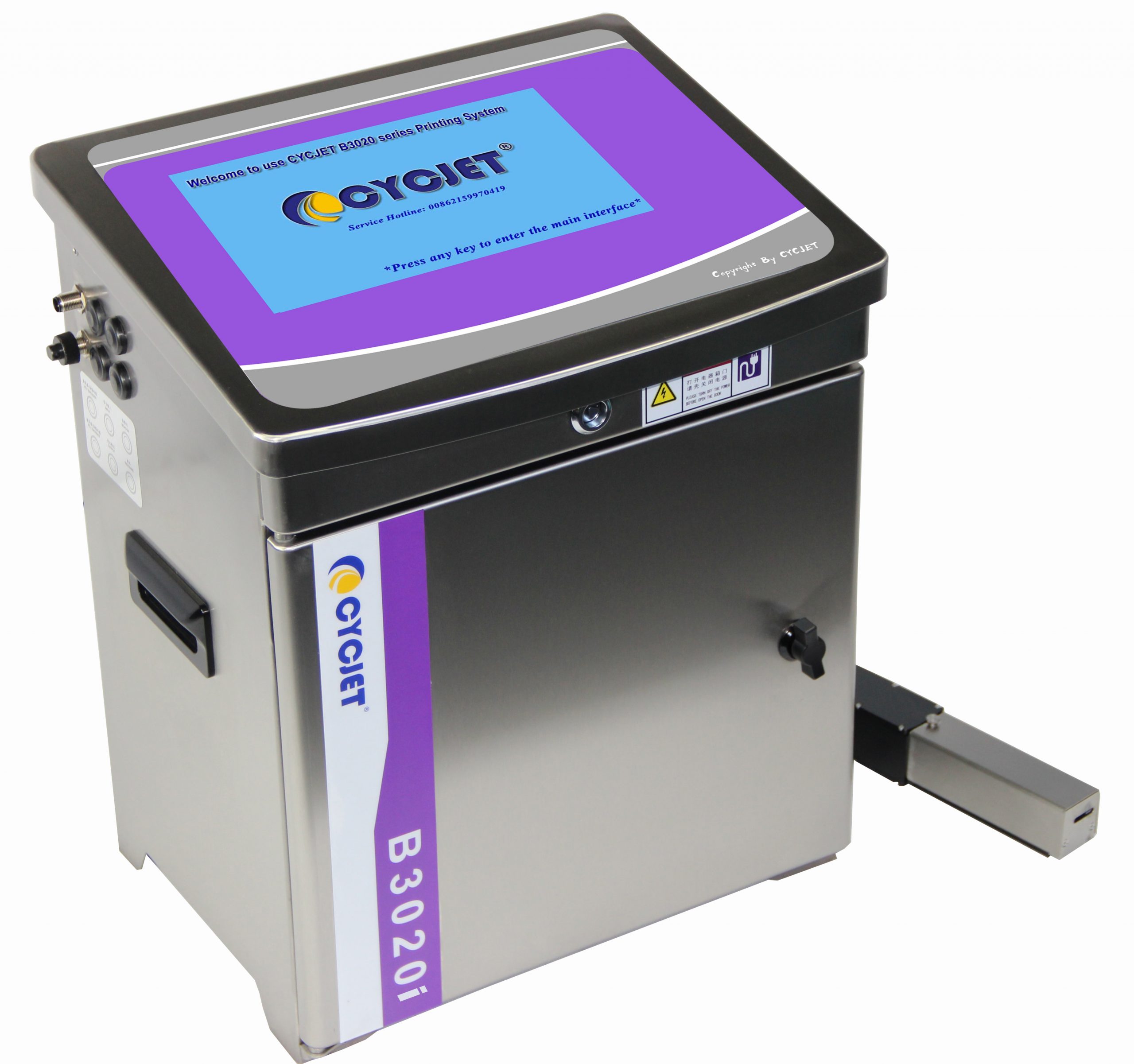
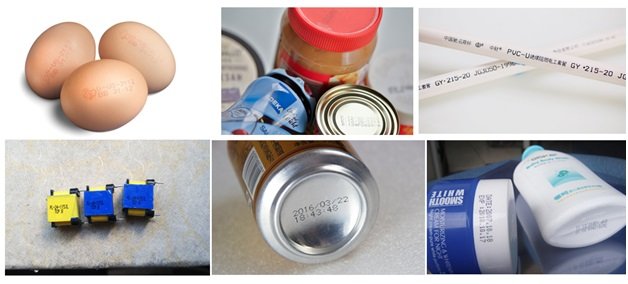
A small character inkjet printer typically uses continuous inkjet (CIJ) technology. Ink is pumped continuously through a nozzle, and individual droplets are electrically charged and deflected to form characters, usually under 12mm in height. This method is common for printing dates and lot codes on bottle caps, cans, and blister packs, and it suits high-speed lines in food, beverage, and pharmaceutical production where fine, precise text is needed on small or curved surfaces. Because the ink circulates continuously, these printers run reliably at high line speeds, though nozzles need periodic cleaning to prevent clogging.
What Is a Large Character Inkjet Printer?

A large-character inkjet printer generally uses Drop-on-Demand (DOD) technology, where ink is only ejected when needed rather than circulated constantly. Characters are typically printed above 15–18mm in height, making this option suited to marking cartons, sacks, wooden pallets, and pipes, particularly where codes need to be read from a distance on a warehouse floor. It fits lower-to-medium speed lines where bold visibility matters more than fine detail. Because ink isn't continuously recirculated, large character systems tend to use less ink and require less maintenance than CIJ units, though they aren't built for the same print resolution.

Where Industrial Inkjet Printers Fit In

"Industrial inkjet printer" is a broader category covering any inkjet system built for factory-floor conditions rather than office use. This includes both small and large character units, along with thermal inkjet (TIJ) systems used for clean, high-resolution printing on cartons and labels. What separates an industrial-grade printer from a commercial one is durability: resistance to dust, vibration, and temperature swings, along with the ability to run for extended shifts without failure.

Matching the Printer to the Product

Different industries lean toward different systems based on packaging type and line speed. Food and beverage and pharmaceutical producers commonly use small character CIJ printers for date and batch coding on primary packaging. Cable and wire manufacturers rely on continuous small character printing for writing specifications along cable length. Plastics and packaging film producers often need high-speed small character printing that keeps pace with film lines. Building materials and metal sheet fabricators typically favor large character printers for visible marking on bulky or rough-surfaced goods. FMCG and automotive parts manufacturers may use both types depending on whether the marking is on primary product packaging or secondary shipping cartons. Startup and SME manufacturers often begin with a single versatile small character printer before adding large character units as product lines diversify.

A Note on Suppliers

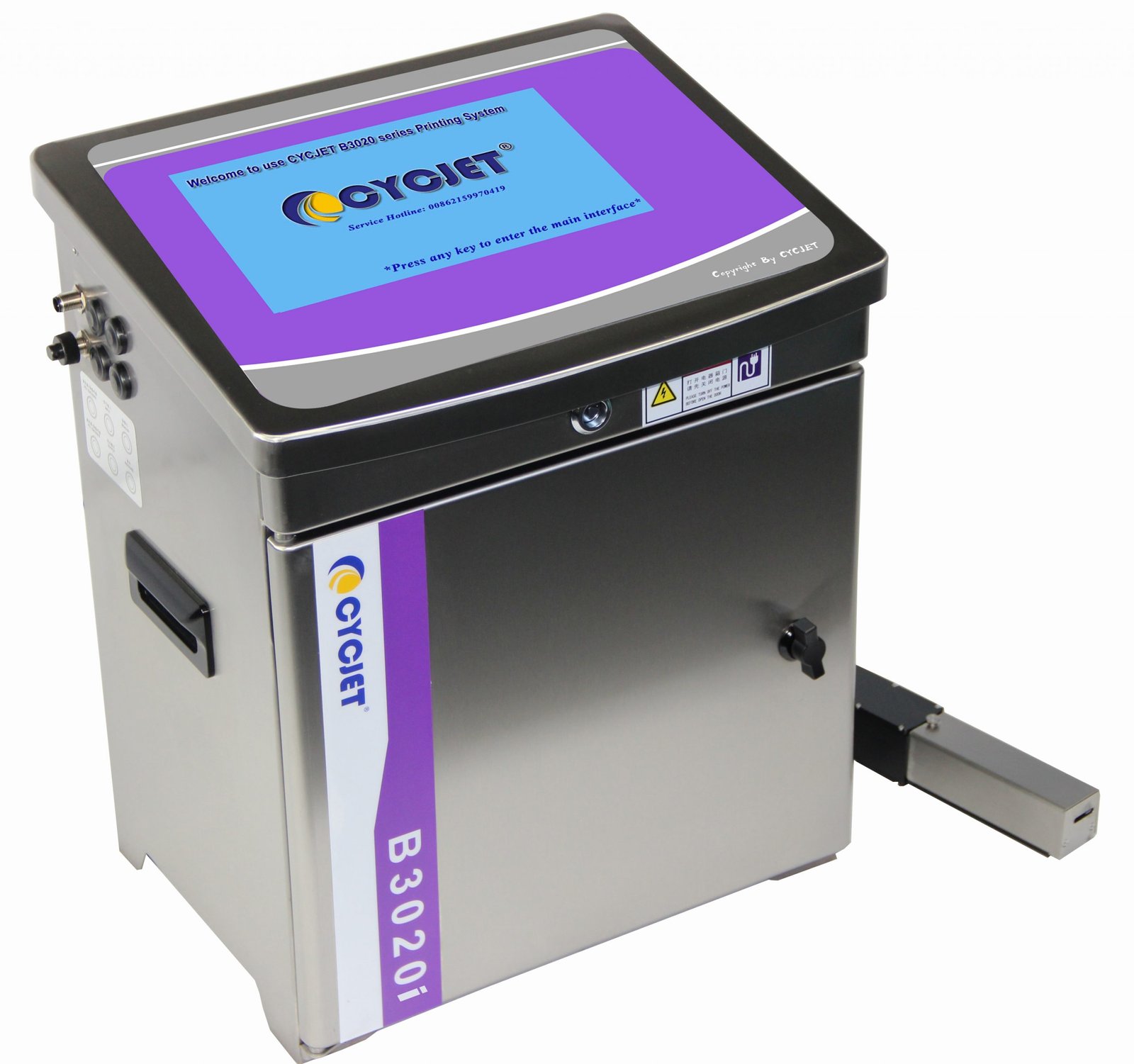
Because line speed, surface material, and character size requirements vary so much between industries, it helps to work with a supplier offering multiple printer types rather than a single fixed model. CYCJET (cycjetinkjet.com) is one example of a manufacturer producing both small character and large character inkjet printers, allowing buyers to compare options against their specific product before purchasing.

Conclusion

Small-character inkjet printers suit fine for high-speed coding on primary packaging, while large-character inkjet printers are built for bold, visible marking on secondary packaging and bulk goods. "Industrial inkjet printer" is the umbrella term covering both, distinguished mainly by factory-floor durability. The right choice comes down to character size needed, line speed, and surface material, not brand preference.


Tuesday, 24 February 2026

Selecting the Right Industrial Inkjet Printing Technology for Modern Manufacturing

Thermal Inkjet Printer: Precision for High-Resolution Packaging

A Thermal Inkjet Printer operates by heating ink within a cartridge to create precise droplets.This technology is widely used when high-resolution printing is essential. Examples include pharmaceutical cartons, food packaging,and retail-ready labels.


For pharmaceutical packaging and QA specialists, clarity is non-negotiable. Barcodes and 2D codes must scan accurately. TIJ

systems are valued for producing sharp text and graphics while maintaining relatively clean operation.

Cartridge-based designs also simplify maintenance, reducing manual ink handling. For packaging processors working with flexible

films and coated cartons, thermal inkjet provides controlled, consistent results.Continuous Inkjet Printer China: High-Speed Industrial Coding

In heavy manufacturing environments, speed and surface adaptability matter more than ultra-high resolution. A Continuous Inkjet Printer China system continuously circulates ink and prints on fast-moving production lines.


Cable and wire manufacturers often rely on CIJ technology.

Automotive parts producers and electronics component assemblers also use it.

It performs well on curved, uneven, or non-porous surfaces.. It can handle vibration, dust, and varying temperatures common in industrial settings. This makes it particularly effective for printing directly onto metal parts, plastic components, and extrusion lines.

Portable Inkjet Printer: Flexible Production Support

Not every production process is fixed to a conveyor line. A Portable Inkjet Printer lets operators mark products wherever they are, in a warehouse, assembly zone, or shipping area.


This flexibility benefits operations with changing layouts or mixed production batches. Instead of installing multiple fixed systems, businesses can move a portable unit between departments. For industrial and B2B operations, this reduces infrastructure complexity while maintaining coding compliance.

Portable Handheld Inkjet Printers: Direct, On-Demand Marking

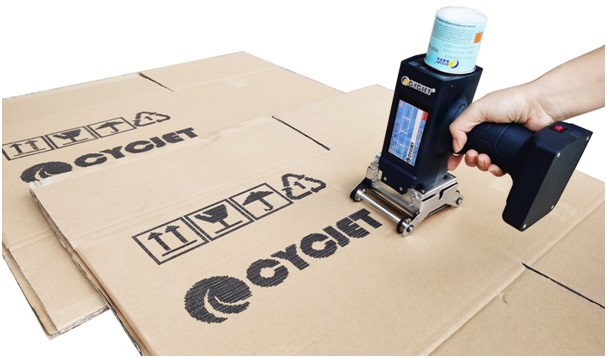
A more compact variation, Portable Handheld Inkjet Printers, supports direct marking on cartons, pipes, drums, and oversized components. Food and beverage facilities often use handheld devices for secondary packaging. Automotive and industrial manufacturers use them for part identification during staging or inspection.


Because handheld printers require minimal setup, they are practical for short production runs or customized batch work. They offer autonomy to operators while preserving traceability standards.

Large Character Inkjet Printers: Visibility in Logistics

When marking outer cartons or shipping materials, readability from a distance becomes important. Engineers design Large Character Inkjet Printers to print bold, durable characters on corrugated boxes and industrial packaging.


For logistics-heavy sectors and export-driven manufacturers, large-format marking improves warehouse scanning, shipment verification, and inventory tracking. In high-volume distribution environments, clear external coding reduces errors during handling and transport.

Conclusion

Reliable industrial coding underpins quality control and supply chain transparency. Thermal Inkjet Printer technology delivers high-

resolution results for packaging applications.

Continuous Inkjet Printer China systems excel in high-speed industrial environments.

Portable Inkjet Printer and Portable Handheld Inkjet Printers provide mobility and operational flexibility. Large Character Inkjet

Printers enhance visibility for logistics and bulk packaging.

 TEl:+ 86-21-5997 0419

Email: service@cycjet.com

Address: 1/F BLDG 4, NO. 333 HUAGAO RD.,HUATING INDUSTRIAL ZONE, JIADING, SHANGHAI (201811) P.R.C.

Wednesday, 29 October 2025

Redefining Industrial Marking: The Rise Of Advanced Inkjet And Laser Solutions

 In today's quick moving manufacturing environment, accuracy and consistency are the keys to productivity. Today's Continuous Inkjet Printers and Portable Handheld Inkjet Printers can automatically carry out routines that require marking anything from barcodes and batch numbers to brand logos without missing a mark as goods move through the supply chain. In this blog, we will discuss the improvement in industrial marking.  


From Flexibility to Durability   

In large-scale applications, Large Character Inkjet Printers provide the necessary reliability you need. If you need bold, legible printing on rough and uneven surfaces, such as carton and wood crates, they can be the perfect solution in industries with high visibility or a long shelf life.  


Many of the current industrial solutions similar to CYCJET Inkjet technology are dedicated to being versatile while maintaining print quality and print speed. 


Marking Technology - Precision Meets Innovation   

Improvements in marking technology go beyond ink. You now have access to cleaner, permanent markings that are resistant to wear and environmental pressures, outlined through a supplier of laser engraving machine systems. At the same timeChina industrial inkjet printer manufacturers have renewed their impact on the rest of the world through their inventive options that combine usage and cost together.   


Today's manufacturing requires accurate identification solutions that can endure a tough manufacturing environment while ensuring legibility and durability. Conventional marking processes can be inadequate in extreme heat/cold, chemicals, or constant handling. Marking technologies are now available that enable manufacturers to ensure product traceability and compliance across production, from initial production to the end user. 


Few Final Words 

Together, this evolution in marking technology is changing how industries mark, track and authenticate products - helping usher in a day that designates that every print, every code, and every mark is a commitment to excellence. 


Thursday, 24 April 2025

Variable QR code printing on packaging boxes: opening a new era of one-item-one-code anti-counterfeiting and traceability marketing

In today’s market environment, brands are facing many challenges, such as rampant counterfeit and shoddy products, complex product supply chain management, and difficult consumer interaction. Yuchang CYCJET inkjet printer prints variable QR codes on packaging boxes, providing innovative solutions to these problems by giving each product a unique QR code, opening a new era of one-to-one anti-counterfeiting and traceability marketing.

一、Anti-counterfeiting function

Traditional anti-counterfeiting methods are easy to be imitated and it is difficult to effectively protect the rights and interests of brands and consumers. Variable QR codes use advanced encryption algorithms, and the generated QR codes are unique and cannot be copied. Consumers only need to use their mobile phones to scan the QR code on the packaging box to quickly check the authenticity of the product. Brands can enter detailed product information in the system, including production batches, sources of raw materials, etc. This information is associated with the QR code. Once a counterfeit product attempts to scan the code, the system will immediately identify and warn. For example, after a well-known liquor brand introduced variable QR code anti-counterfeiting, the counterfeit product complaint rate dropped significantly, and consumers’ trust in the brand increased significantly.


二、Traceability function

Product traceability is crucial for brands to optimize supply chain management and ensure product quality. Variable QR codes can record the entire process of product information from raw material procurement, production and processing, warehousing and logistics, and sales terminals. When quality problems occur, brand owners can quickly locate the problem link by scanning the code, realize accurate recall, and reduce losses. At the same time, consumers can also clearly understand the “past and present” of the product after scanning the code and enhance their confidence in product quality. Taking agricultural products as an example, consumers can scan the QR code on the vegetable packaging box to learn about its planting soil environment, fertilization and medication, picking time, and transportation route so that they can eat more assured.

三、 Marketing Function

Variable QR codes provide brands with an effective channel for direct interaction with consumers. Brands can use code scanning to carry out a variety of marketing activities, such as code scanning lottery, points redemption, coupon distribution, etc. After scanning the code, consumers enter the brand-exclusive page, where they can not only obtain product-related information but also participate in interesting interactive activities to increase the fun and added value of purchasing products. By analyzing consumer code scanning data, brands can also gain an in-depth understanding of consumer behavior preferences, geographical distribution, etc., to achieve precision marketing and improve marketing effectiveness. A beverage brand launched a code-scanning-to-win-red-envelopes activity, during which product sales increased by 30%, and brand awareness and market share also increased significantly.

The one-to-one anti-counterfeiting and traceability marketing solution of variable QR code printing on packaging boxes integrates multiple functions of anti-counterfeiting, traceability and marketing, providing strong support for brand owners in the fierce market competition. Through this innovative solution, brand owners can effectively combat counterfeiting and optimize supply chain management and deeply tap into consumer value to achieve sustainable development of the brand.

CYCJET is the brand name of Yuchang Industrial Company Limited. As a manufacturer, CYCJET has more than 20 years of experience in R&D for different types of handheld inkjet printing solutions, laser printing solutions, portable marking solutions, and high-resolution printing solutions in Shanghai, China.

Thursday, 23 January 2025

Food ingredient list upgrade, how can UV inkjet printer meet the regulatory and traceability requirements?

In the food packaging industry, the ingredient list is more than just a simple information label. It carries consumers’ trust in food safety, the company’s commitment to regulatory compliance, and the display of brand image. However, traditional labeling methods, such as thermal transfer and labeling, are often difficult to cope with the complex needs of the industry. The introduction of UV inkjet Printers provides an efficient and accurate solution for printing ingredient lists on food packaging bags, and is becoming a key driving force for industry upgrades.

一、The core pain points of the ingredient list of food packaging bags

1. Difficulty in adapting to multiple materials

Food packaging bags are made of a variety of materials, from plastic films, aluminum foil bags to composite materials. Various materials have different requirements for the adhesion, clarity and durability of labeling technology. Traditional labeling is prone to bubbling or falling off, and thermal transfer printing is difficult to achieve high-quality printing on certain materials.

2. Insufficient environmental adaptability

The environment in which food packaging bags are produced, transported, and stored may involve high temperature, humidity, grease, and other conditions, which poses a challenge to the long-term clarity of the ingredient list. Traditional labeling methods often cannot meet these requirements, resulting in blurred or even missing information.

3. Cost and efficiency issues

Traditional labeling requires consumables and manual maintenance, and is prone to errors, affecting overall production efficiency. For high-volume production companies, how to reduce costs while ensuring efficient operation is a difficult problem that needs to be solved urgently.

4. Regulations and traceability requirements

With the increasingly stringent food safety regulations, the labeling of the ingredient list must not only be clear, but also meet multiple requirements such as anti-counterfeiting, anti-tampering, and traceability. Traditional labeling methods are slightly insufficient in data traceability and flexibility.

二、 Breakthrough solutions of inkjet printing machines

1. Highly adaptable technology

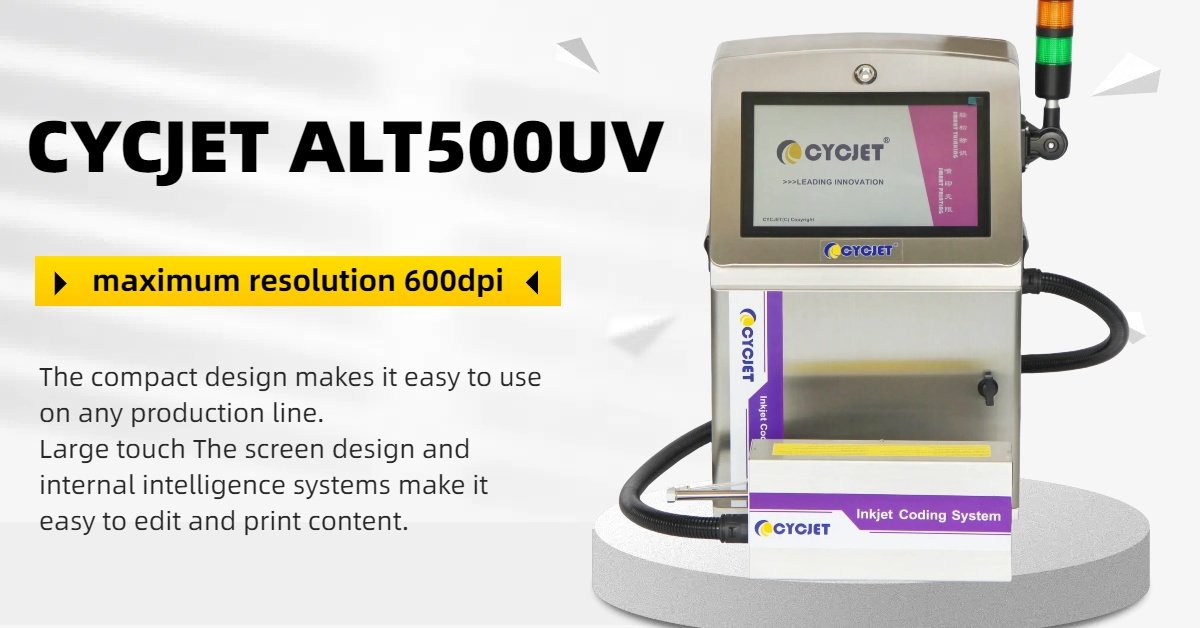
UV inkjet printers use non-contact digital printing technology, which is compatible with a variety of materials. Whether it is soft film or smooth aluminum foil, it can achieve high adhesion and precise printing. No longer worry about material restrictions, allowing companies to flexibly respond to different packaging needs.

2. Durability and environmental protection coexist

The inkjet coding machine uses ultraviolet curing technology to make the printed content dry instantly, and is scratch-resistant, waterproof and oil-resistant. Whether it is refrigerated, transported or displayed on shelves, the printed ingredient list always remains clear, greatly improving the reliability of the product and user experience.

3. High efficiency and low cost

Compared with the labeling method, the UV inkjet printer does not require additional consumables, eliminating the cost of label production and manual operation. The printing speed is fast, supports real-time data changes, and easily achieves high-efficiency production in large quantities.

4. Food safety traceability

The Industrial Inkjet Printer combines industrial 4.0 technology to record production data in real time, accurately associate each bag of product with its production batch, meet the strict requirements of the food industry for safety traceability, and support personalized printing to further enhance brand competitiveness.

三、UV inkjet printers help the food packaging industry to upgrade comprehensively

UV inkjet printers not only solve the pain points in the printing of ingredient lists on food packaging bags, but also bring a new identification mode to the industry: flexible, efficient and environmentally friendly. Its application not only meets the requirements of food safety regulations, but also helps companies reduce costs, improve efficiency, and add points to their brand image.

As consumers continue to pay more attention to food transparency and quality, the food packaging industry is ushering in a revolution centered on labeling technology. Choosing a online inkjet printer is not just choosing a device, but also a step towards the future of food labeling.

In the future, clear labeling is not only a compliance requirement, but also the key to corporate competition. UV inkjet printers create unlimited possibilities for the food packaging industry.

CYCJET is the brand name of Yuchang Industrial Company Limited. As a manufacturer, CYCJET have more than 19 years of experience for R& D different types of handheld inkjet printing solution, Laser printing solution, and portable marking solution, High Resolution Printing solution in Shanghai China.


Tuesday, 13 February 2024

Elevate Your Brand with Laser Engraving Machines and Large Character Inkjet Printers

In today's competitive market, standing out is crucial for businesses aiming to leave a lasting impression. Whether you're a small-scale artisan or a large-scale manufacturer, the ability to personalize and brand your products effectively can make all the difference. This is where laser engraving machines and large character inkjet printers come into play, revolutionizing the way we imprint and mark various surfaces.

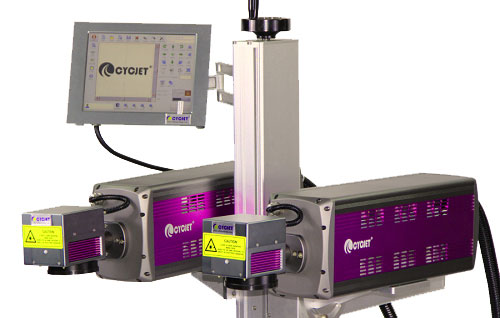
Laser Engraving Machines offer unparalleled precision and versatility. From intricate designs on metal and wood to precise markings on plastics and glass, these machines provide a wide range of possibilities for customization. Whether you're personalizing promotional items, creating bespoke signage, or adding serial numbers for traceability, laser engraving ensures crisp, permanent markings that enhance the value of your products.

On the other hand, large-character inkjet printers are indispensable for printing bold, eye-catching messages and graphics on surfaces like cardboard boxes, pallets, and packaging materials. With their high-speed printing capabilities and durable ink formulations, these printers enable efficient and cost-effective branding solutions for businesses of all sizes. Whether you need to imprint expiration dates, batch codes, or logos, large-character inkjet printers deliver consistent results with minimal maintenance requirements.

When it comes to choosing a supplier for laser engraving machines and large-character inkjet printers, reliability and expertise are paramount. Look for a supplier with a proven track record in the industry, offering quality equipment backed by excellent customer support and service. Additionally, consider factors such as affordability, ease of use, and compatibility with your existing workflow.

At Shanghai Yuchang Industrial Co. LTD, we understand the importance of quality and reliability in your branding and marking processes. As a trusted supplier of laser engraving machines and large-character inkjet printers, we provide cutting-edge solutions tailored to your specific needs. Our experienced team is dedicated to helping you elevate your brand and streamline your operations with innovative printing technologies.

In conclusion, investing in laser engraving machines and Large-Character Inkjet Printers can significantly enhance your brand's visibility and impact. With the right equipment and support, you can unleash your creativity and take your branding efforts to new heights. Partner with a reputable supplier like Shanghai Yuchang Industrial Co. LTD to unlock the full potential of these powerful tools and stay ahead in today's competitive marketplace.

Monday, 13 February 2023

Top 5 Benefits of a Portable Thermal Inkjet Printer?

The market share of a thermal inkjet printer is high because of a wide list of its advantages. It is simple to use, compact and simple in design, and a convenient way to imprint a variety of designs to speak for your brands.

If a customer belongs to a small business, this Hand Jet Printer sounds great to them. It supports almost every type of ink from black, blue, and red to black, so don't worry about any color signage over the surface. This is a summary; if you want to learn more, continue reading this post.

Top Four Advantages of a Thermal Handheld Inkjet Printer

This inkjet printer is a must-have for any type of business. It is very useful in establishing various designs and patents over your specific products in order to distinguish them from others.

If you are new to this field, you should be aware of the advantages of this device before purchasing it from a Thermal Inkjet Printer Manufacturer.


1. Portable and Light Weight

The hand-held jet printer is very portable and convenient to leverage in whatever location you would like. It is light in weight, allowing staff to carry it for extended periods of time without fatigue, and it allows for editing software customization.

2. Adaptable to Ink Replacement

Unlike a small-character inkjet printer, this printer is easy to intensively clean and maintain. It allows us to tailor color options and performance to meet a wide range of ink requirements.

3. Cost-Effectivity

This machine does not consist of any complex parts or components, which is the reason for its increased price. Nonetheless, unlike other traditional methods, it does not necessitate routine maintenance. If you think carefully, it comes at no cost.

4. Online and Handheld Dual Use   

A handheld machine is very adaptable in its performance and operations. You could use it for creating QR codes, bar codes, and variable data transmission.